


Lysanne
Bootcamp
IT Project Management with AI Bootcamp
Job after the bootcamp
Steuer-Fachschule Dr. Endriss GmbH & Co.KG
Education voucher at hand? Step into the fast lane: Contact us
Contact us70%+ Hiring rate
7000+ Alumni
43% Female alumni
650+ Courses delivered

100% Financing via education voucher


70%+ Hiring rate
7000+ Alumni
43% Female alumni
650+ Courses delivered
100% Financing via education voucher
No vague promise. Here is the concrete result of the 16 weeks after doing the Digital & AI Transformation Management Bootcamp, in black and white.
Duration
16 Weeks
Full-time · Mon–Fri, 09:00–18:30
Format
Remote
Live online | approx. 15 participants
Course language
German
Degree
Digital & AI Transformation Management Certificate
Optional Certificate
AWS AI Practitioner
Prerequisite
No prior knowledge
We start with the foundation
Expected salary
40.000€ - 75.000€
Salary range according to the Employment Agency
Head Coach

Elisabeth Buchsteiner
Head of Product and Project Management
Jobs you apply for afterwards
Financing
Eligible for funding via the Federal Employment Agency (AZAV and HZA certified)
Foundations & Change Readiness
In this phase, you lay the foundation by analyzing the digital and AI transformation landscape and strengthening your own AI proficiency through structured prompting. At the same time, you learn how to prepare organizations for the upcoming changes using change management methods.
Foundations & Change Readiness
In this phase, you lay the foundation by analyzing the digital and AI transformation landscape and strengthening your own AI proficiency through structured prompting. At the same time, you learn how to prepare organizations for the upcoming changes using change management methods.
Why you should choose us
We have been training tech talent for over 10 years. That is the difference between a promise and a track record.
700+
Courses delivered
7.000+
Alumni in tech jobs
10+
Years of building careers
Our partner companies
Don't just work through videos. Instead, learn live as part of a team tackling real-world problems without ever being left to fend for yourself.

Teaching DNA
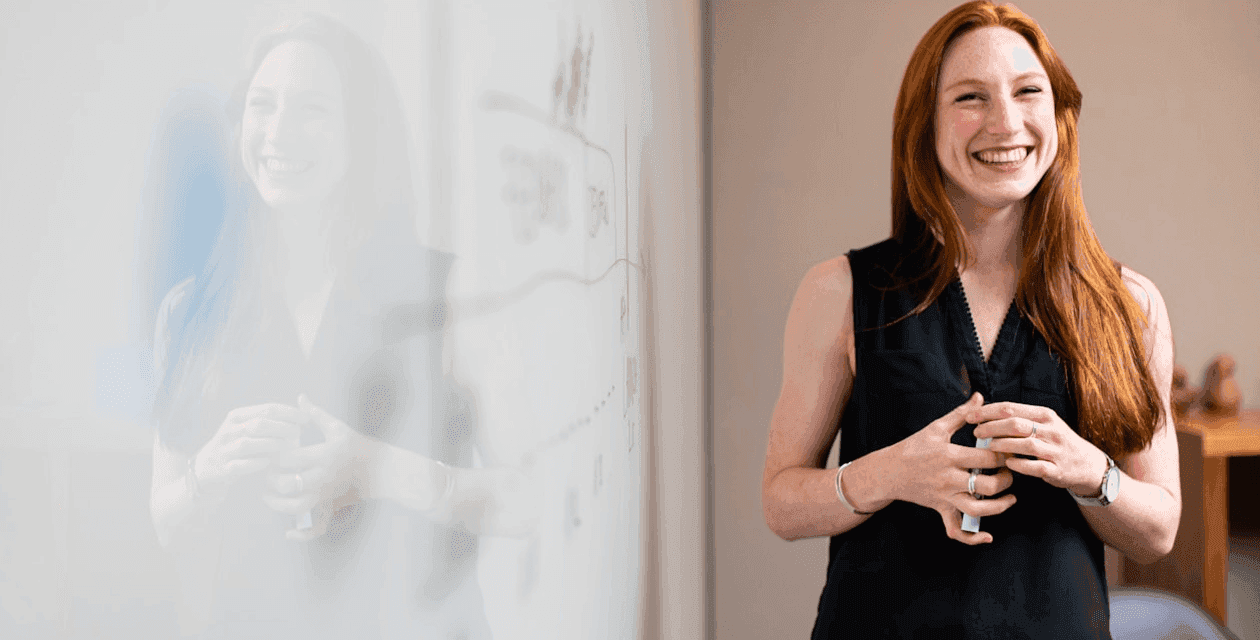
Teaching is not about lecturing from the front of the room. It is the guided facilitation of active learning and is based on relevance, practical application, collaboration, and problem-solving.
Career Service · Career Compass
Our career service helps you turn your new skills into your next role with CV reviews, LinkedIn feedback, and interview coaching.
Why now
The sooner you start, the sooner you start earning again. Your career is yours to design. We are here to help you build it.
TODAY
Free consultation, we assist with applying for an education voucher and support you throughout the entire application process.
Week 1–16
16 weeks full-time, live online or on campus, with your own final project for the portfolio.
Week 17+
70%+ of our Graduates find a job within 1 year, and one out of three secure a job in the first month after graduation.
100% funded through the education voucher. Alternatively, self-paying rate or scholarship available.
In most courses we start with the basics. You don't need an IT background just motivation and full-time commitment.
From application to coaches to Career Service, we support you from day one to the job.
Our Alumni’s success stories
Lysanne
Bootcamp
IT Project Management with AI Bootcamp
Job after the bootcamp
Steuer-Fachschule Dr. Endriss GmbH & Co.KG
Johannesfrederking
Bootcamp
AI-Powered Marketing Bootcamp
Job after the bootcamp
EURO 2024 GmbH
Julien
Bootcamp
Product Management with AI in IT Bootcamp
Job after the bootcamp
personal projects
Petra
Bootcamp
AI Modeling Bootcamp
Job after the bootcamp
DEEP CONTENT by heise
Luca
Bootcamp
Data Engineering Bootcamp
Job after the bootcamp
Simplicity networks
Jonas
Bootcamp
AWS Cloud Computing with AI Bootcamp
Job after the bootcamp
Career1Group
Sviatoslav
Bootcamp
Java Development with AI Bootcamp
Job after the bootcamp
KfW
Jimmy
Bootcamp
Full-Stack Software Development with AI Bootcamp
Job after the bootcamp
vGen GmbH
Marie
Bootcamp
UX/UI Design & AI Bootcamp
Job after the bootcamp
Compleat GmbH
Isabelle
Bootcamp
AI Engineering - Data Science and Machine Learning Engineering Bootcamp
Job after the bootcamp
Deutsche Bahn
Daiana
Bootcamp
Data Analytics & AI Bootcamp
Job after the bootcamp
TELUS Digital AI Data Solutions
Nico
Bootcamp
Data Science & AI Bootcamp
Job after the bootcamp
HEADS UP! GmbH
Amal
Bootcamp
IT Project Management with AI Bootcamp
Job after the bootcamp
âme creative engineers
Melanie
Bootcamp
AI-Powered Marketing Bootcamp
Job after the bootcamp
ExB Group
Rascal
Bootcamp
Product Management with AI in IT Bootcamp
Job after the bootcamp
ballio
Toara
Bootcamp
AI Modeling Bootcamp
Job after the bootcamp
Corte Oliveta
Flavia
Bootcamp
Data Engineering Bootcamp
Job after the bootcamp
Carnival Maritime GmbH
Ripalbhavsar29
Bootcamp
AWS Cloud Computing with AI Bootcamp
Job after the bootcamp
SfS Schulungsgesellschaft mbH
Richard
Bootcamp
Java Development with AI Bootcamp
Job after the bootcamp
HAUCK AUFHÄUSER LAMPE
Felix
Bootcamp
Full-Stack Software Development with AI Bootcamp
Job after the bootcamp
Jacobs
Lena
Bootcamp
UX/UI Design & AI Bootcamp
Job after the bootcamp
Advantic GmbH
Tolgacebii
Bootcamp
AI Engineering - Data Science and Machine Learning Engineering Bootcamp
Job after the bootcamp
Pexon Consulting GmbH
Dirk
Bootcamp
Data Analytics & AI Bootcamp
Job after the bootcamp
AXRO GmbH
Burkhardt
Bootcamp
Data Science & AI Bootcamp
Job after the bootcamp
Conet Solutions
Simonmenner
Bootcamp
IT Project Management with AI Bootcamp
Job after the bootcamp
Studio Julian Charrière
Eva
Bootcamp
AI-Powered Marketing Bootcamp
Job after the bootcamp
MYMARINI GmbH
Jan
Bootcamp
Product Management with AI in IT Bootcamp
Job after the bootcamp
Haiilo
Meusburger
Bootcamp
AI Modeling Bootcamp
Job after the bootcamp
Boehringer Ingelheim
Emily
Bootcamp
Data Engineering Bootcamp
Job after the bootcamp
Fincon Reply GmbH
Kostyantyn
Bootcamp
AWS Cloud Computing with AI Bootcamp
Job after the bootcamp
globaldatanet
Carsten
Bootcamp
Java Development with AI Bootcamp
Job after the bootcamp
ALBAG Unternehmensgruppe
Babshellmann
Bootcamp
Full-Stack Software Development with AI Bootcamp
Job after the bootcamp
TOWA. the digital growth company
Hanna
Bootcamp
UX/UI Design & AI Bootcamp
Job after the bootcamp
OMR
Sven
Bootcamp
AI Engineering - Data Science and Machine Learning Engineering Bootcamp
Job after the bootcamp
msg
Philippe
Bootcamp
Data Analytics & AI Bootcamp
Job after the bootcamp
hellomateo
Zoe
Bootcamp
Data Science & AI Bootcamp
Job after the bootcamp
Gruner + Jahr
Aylin
Bootcamp
IT Project Management with AI Bootcamp
Job after the bootcamp
AEB
Stephanrathgeber
Bootcamp
AI-Powered Marketing Bootcamp
Job after the bootcamp
HWZ University of Applied Sciences in Business Zurich
Amressam91
Bootcamp
Product Management with AI in IT Bootcamp
Job after the bootcamp
Penny Software
Dominik
Bootcamp
AWS Cloud Computing with AI Bootcamp
Job after the bootcamp
Pexon Consulting GmbH
Abdul
Bootcamp
Java Development with AI Bootcamp
Job after the bootcamp
AKQUINET
Astrid
Bootcamp
Full-Stack Software Development with AI Bootcamp
Job after the bootcamp
MACHOLD Informationstechnologie GmbH
Moritzmb
Bootcamp
UX/UI Design & AI Bootcamp
Job after the bootcamp
ZUUMEO GmbH
Aljoscha
Bootcamp
AI Engineering - Data Science and Machine Learning Engineering Bootcamp
Job after the bootcamp
nextevolution GmbH
Trina
Bootcamp
Data Analytics & AI Bootcamp
Job after the bootcamp
Deutsche Bundesbank
Pascale
Bootcamp
Data Science & AI Bootcamp
Job after the bootcamp
State Office for Taxes and Finances
Maroua
Bootcamp
IT Project Management with AI Bootcamp
Job after the bootcamp
RockstarDevelopers GmbH
Danielwrede
Bootcamp
AWS Cloud Computing with AI Bootcamp
Job after the bootcamp
Enit - A Proalpha group company
Samuel
Bootcamp
Java Development with AI Bootcamp
Job after the bootcamp
APTIS GmbH
Max
Bootcamp
Full-Stack Software Development with AI Bootcamp
Job after the bootcamp
Capgemini
Dennis
Bootcamp
UX/UI Design & AI Bootcamp
Job after the bootcamp
Velvet Trading s.r.o.
Tamerajaj
Bootcamp
AI Engineering - Data Science and Machine Learning Engineering Bootcamp
Job after the bootcamp
kineo.ai
Julianappler
Bootcamp
Data Analytics & AI Bootcamp
Job after the bootcamp
Eurowings
Eva
Bootcamp
IT Project Management with AI Bootcamp
Job after the bootcamp
Scodix
Calvin
Bootcamp
AWS Cloud Computing with AI Bootcamp
Job after the bootcamp
VTG
Fabian
Bootcamp
Java Development with AI Bootcamp
Job after the bootcamp
deinHofmarkt.de
Svenja
Bootcamp
Full-Stack Software Development with AI Bootcamp
Job after the bootcamp
Green Planet Energy eG
Nadine
Bootcamp
UX/UI Design & AI Bootcamp
Job after the bootcamp
Nitzsche Fashion GmbH & Co. KG
Minhas
Bootcamp
Data Analytics & AI Bootcamp
Job after the bootcamp
Uptrail
Francis
Bootcamp
IT Project Management with AI Bootcamp
Job after the bootcamp
Immaconcept Limited
Meltembehar
Bootcamp
AWS Cloud Computing with AI Bootcamp
Job after the bootcamp
Vattenfall
Marco
Bootcamp
Java Development with AI Bootcamp
Job after the bootcamp
BT Consulting - IT-Solutions
Philipp
Bootcamp
Full-Stack Software Development with AI Bootcamp
Job after the bootcamp
Timely
Artur
Bootcamp
UX/UI Design & AI Bootcamp
Job after the bootcamp
ADVERMA Advertising & Marketing GmbH
Torben
Bootcamp
Data Analytics & AI Bootcamp
Job after the bootcamp
EOS Group
Abhi13Abhinav
Bootcamp
IT Project Management with AI Bootcamp
Job after the bootcamp
DroneMasters Academy
Nora
Bootcamp
AWS Cloud Computing with AI Bootcamp
Job after the bootcamp
Pexon Consulting GmbH
Hina
Bootcamp
Java Development with AI Bootcamp
Job after the bootcamp
Xpert Digital
Erik
Bootcamp
Full-Stack Software Development with AI Bootcamp
Job after the bootcamp
Babiel GmbH
Martin
Bootcamp
UX/UI Design & AI Bootcamp
Job after the bootcamp
SuperCode
Anne
Bootcamp
IT Project Management with AI Bootcamp
Job after the bootcamp
NORDpole Studio
David
Bootcamp
AWS Cloud Computing with AI Bootcamp
Job after the bootcamp
Akademie Überlingen
Maria
Bootcamp
Java Development with AI Bootcamp
Job after the bootcamp
Statistical State Office of Baden-Württemberg
Sahed
Bootcamp
Full-Stack Software Development with AI Bootcamp
Job after the bootcamp
Die Techniker
Weronika
Bootcamp
UX/UI Design & AI Bootcamp
Job after the bootcamp
GSWE GmbH
Chao
Bootcamp
IT Project Management with AI Bootcamp
Job after the bootcamp
allO
Anselmo
Bootcamp
AWS Cloud Computing with AI Bootcamp
Job after the bootcamp
CONET
Xuan
Bootcamp
Java Development with AI Bootcamp
Job after the bootcamp
Hyand Group
Benjaminranft
Bootcamp
Full-Stack Software Development with AI Bootcamp
Job after the bootcamp
airfocus
Ksenia
Bootcamp
IT Project Management with AI Bootcamp
Job after the bootcamp
WOLFF GRUPPE
Shakti
Bootcamp
AWS Cloud Computing with AI Bootcamp
Job after the bootcamp
oraya
Janniskhammas
Bootcamp
Java Development with AI Bootcamp
Job after the bootcamp
Toadman Interactive
Zhengsiqi
Bootcamp
Full-Stack Software Development with AI Bootcamp
Job after the bootcamp
Information and Technology North Rhine-Westphalia (IT.NRW)
Johanneszirm
Bootcamp
IT Project Management with AI Bootcamp
Job after the bootcamp
SIGNAL IDUNA Group
Justice
Bootcamp
AWS Cloud Computing with AI Bootcamp
Job after the bootcamp
Expeditors
Leonie
Bootcamp
Java Development with AI Bootcamp
Job after the bootcamp
travelite GmbH + Co. KG
Yovalafar
Bootcamp
IT Project Management with AI Bootcamp
Job after the bootcamp
Circus Group
Samuel
Bootcamp
AWS Cloud Computing with AI Bootcamp
Job after the bootcamp
Rail-Flow
Niklas
Bootcamp
Java Development with AI Bootcamp
Job after the bootcamp
Stadtwerke München GmbH
Daniela
Bootcamp
IT Project Management with AI Bootcamp
Job after the bootcamp
rexx systems
Yassin
Bootcamp
AWS Cloud Computing with AI Bootcamp
Job after the bootcamp
Lucke EDV GmbH
David
Bootcamp
Java Development with AI Bootcamp
Job after the bootcamp
best practice consulting AG | bpc AG
Tatiana
Bootcamp
IT Project Management with AI Bootcamp
Job after the bootcamp
PAPAGAYO BIKE SL
Helgastock
Bootcamp
AWS Cloud Computing with AI Bootcamp
Job after the bootcamp
Deloitte
Vincent
Bootcamp
Java Development with AI Bootcamp
Job after the bootcamp
Seven Principles Mobility GmbH
Dipanwita
Bootcamp
AWS Cloud Computing with AI Bootcamp
Job after the bootcamp
Max Planck Institute of Psychiatry
Markus
Bootcamp
Java Development with AI Bootcamp
Job after the bootcamp
b+m Informatik GmbH
Ameya
Bootcamp
AWS Cloud Computing with AI Bootcamp
Job after the bootcamp
infinity managed services GmbH
Dirk
Bootcamp
Java Development with AI Bootcamp
Job after the bootcamp
CSB Schimmel Automobile GmbH
Sofia
Bootcamp
Java Development with AI Bootcamp
Job after the bootcamp
andrena objects ag
Secure your spot in the next bootcamp or let’s discuss in a free consultation whether it’s right for you.
We AI-proof
your career


